Betting exchanges and bookmakers: two different GRAI licences
 Updated 4 October 2026Register checked 4 October 2026
 For readers in Ireland, 18+
Remote Betting and Remote Betting Intermediary are separate GRAI licences for two different businesses. A bookmaker prices and takes your bet; an exchange lets bettors bet with each other and charges for the service. This guide sets out the difference and who holds which licence.
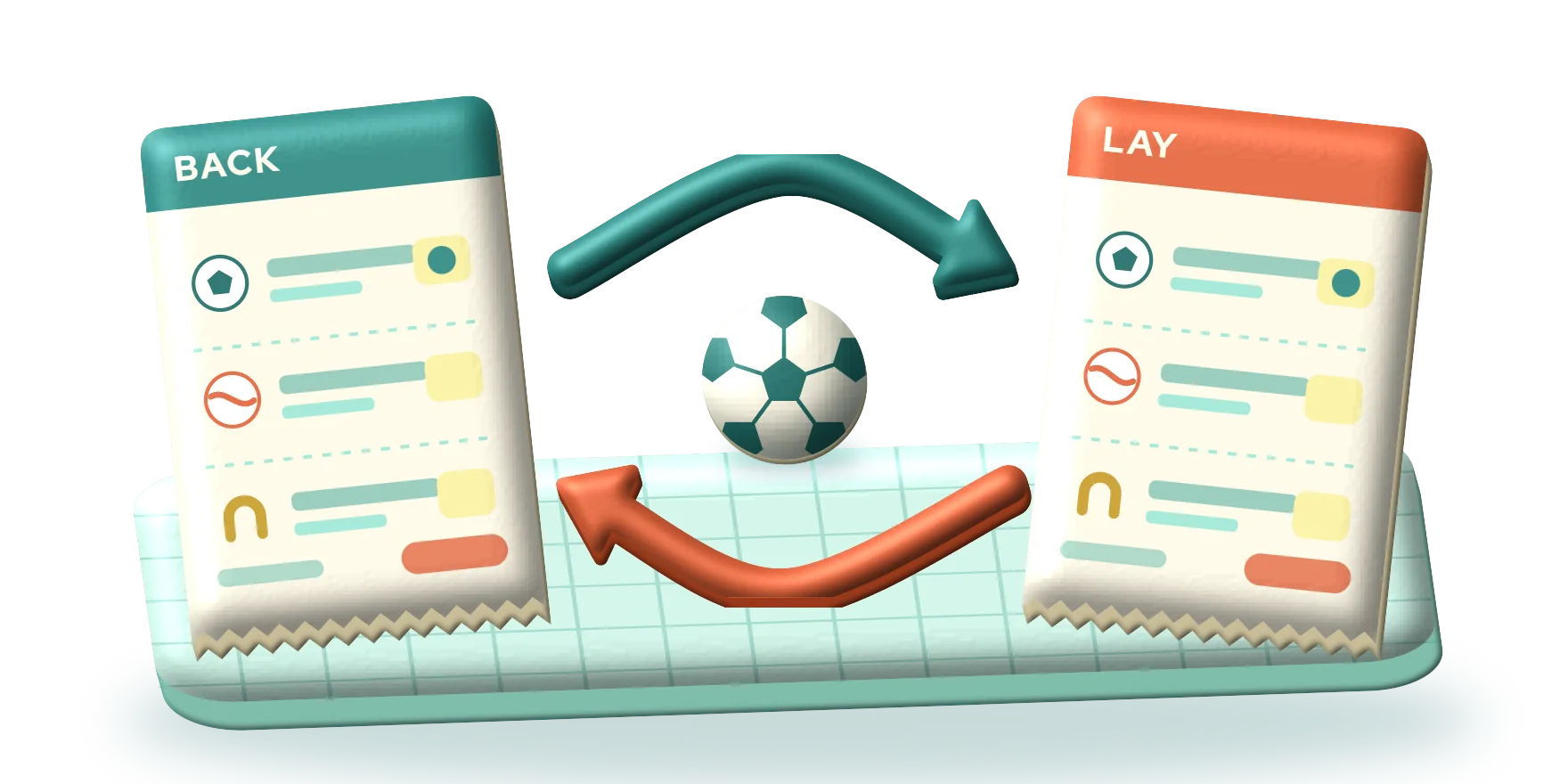
Two business models
A bookmaker and a betting exchange both let you bet on sport, but they are different businesses, and the Gambling Regulation Act 2024 treats them differently. GRAI issues each its own licence.
A bookmaker is defined in section 3(2) of the Act as a person who sets odds, accepts bets and undertakes to pay out winnings. When you bet with a bookmaker, the bookmaker is the other side of your bet. It chooses the price, decides how much it will accept, and pays you if you win.
A remote betting intermediary is defined in section 2(1) as a person who provides a facility that enables another person to engage in betting with a person other than the intermediary. In plain terms, an exchange runs the marketplace. Bettors offer and take prices from each other; the exchange matches them, holds the stakes and settles the market. It is not the other side of your bet.
| Bookmaker | Betting exchange | |
|---|---|---|
| GRAI licence | Remote Betting (RB) | Remote Betting Intermediary (RBI) |
| Who sets the price | The bookmaker | Other bettors, through the offers they make |
| Who is on the other side of your bet | The bookmaker | Another bettor |
| How the operator earns | A margin built into its prices | Charges for using the facility, usually a commission |
| Bet that something will not happen | Only where the bookmaker offers such a market | Yes, by laying a selection |
| Holders on the register, 3 October 2026 | 32 licences | 3 licences |
Everything else that protects you, from identity checks to deposit limits, depends on holding a GRAI licence of either kind, not on the business model. Betting costs money and most bets lose, on an exchange as much as with a bookmaker.
How an exchange market works: back and lay
An exchange market has two sides for every selection. To back a selection is to bet that it will happen, as you would with a bookmaker. To lay a selection is to bet that it will not happen: you take the role a bookmaker would normally play for that one bet, and you accept the risk of paying the backer if the selection wins.
A worked example on an invented market
The market below is fictional and exists only to show the arithmetic. Take a match between two invented teams, Northfield and Southvale. One bettor wants to back Northfield at a decimal price of 3.0 for €10. Another bettor is willing to lay Northfield at that price.
- The backer’s stake is €10. If Northfield wins, the backer receives €30 back in total: the €10 stake plus €20 in net winnings.
- The layer’s liability is €20: the amount the layer must pay if Northfield wins. The exchange holds that amount from the layer’s balance while the bet is open.
- If Northfield does not win, the layer keeps the backer’s €10 stake.
The layer risks €20 to win €10. At a higher price the gap widens: laying €10 at a price of 11.0 means a liability of €100. That is the main difference a bettor feels on an exchange. A lay bet can cost far more than its stake, and the amount at risk is the liability, not the stake.
Matched and unmatched bets
A bet on an exchange only stands once another bettor takes the other side. If you ask for a price nobody is offering, all or part of your bet stays unmatched until someone accepts it or you cancel it. Prices move as offers are matched and withdrawn, so the price you see can change before your bet is matched. What happens to an unmatched bet when a market is suspended or an event starts is set by the exchange’s market rules, which you should read before betting.
After the market settles, the exchange takes its charge, usually a commission on a customer’s net winnings in that market. The rate is set by each exchange; we explain below why this atlas does not quote rates.
The Remote Betting licence
The Remote Betting licence is the bookmaker licence for betting provided online or by phone. On the register we read on 3 October 2026, 32 of the 36 entries were Remote Betting licences. Every bookmaker in this atlas holds one, and the licence number contains the code RB, for example GRAI-0000-RB-26-0001.
A bookmaker sets its own prices. Each price carries a margin, which is how the bookmaker earns over many bets; the sum of the implied probabilities in a market comes to more than 100%. See Bookmaker margins: what the overround tells you for how to read it. Because the bookmaker is on the other side of each bet, it also decides which bets and stakes it accepts.
Pool betting sits with this licence too. Section 85(1)(d) leaves pool betting outside the intermediary licence, and the tote operator on the register, TDCO Limited (trading name Tote), holds a Remote Betting licence, GRAI-0796-RB-26-0001.
Duties that come with the licence
The Act sets duties that every licensee must meet. The ones you will notice as a customer:
- identity and age verification before an account is opened (section 169; S.I. 315/2026);
- no betting by anyone under 18 (section 158);
- deposit limits on remote accounts (section 164);
- no credit and no credit cards (section 165);
- closing an account when the customer asks, as GRAI listed when the licences began.
These are the minimum. How each bookmaker applies them, with dates and sources, is set out in its operator file.
The Remote Betting Intermediary licence
The Remote Betting Intermediary licence covers a business that provides a facility for people to bet with each other. GRAI describes it on its business-to-consumer licensing page as a facility that lets a person engage in betting activities with another person other than the licensee. Under section 85(1)(d), it allows only that activity, and not pool betting.
The Act’s definition of turnover shows how an intermediary earns: for an intermediary, turnover is the total paid in charges to the licensee for providing the facility. An exchange earns from charges for the service, not from winning bets against its customers.
Prediction markets
GRAI’s licensing page also says that prediction markets which provide betting activities fall within the definition of a remote betting intermediary. Such a market needs this licence to serve people in Ireland, and GRAI’s page says that a prediction market without one should not provide its service to people here.
What does not count as an intermediary
A site that compares bookmakers takes no bets, holds no money, matches no bettors and earns nothing from stakes. Rivoatlas works this way. On our reading of the Act, that is not a facility for betting, and Rivoatlas does not hold an intermediary licence or any other gambling licence. GRAI has not published guidance on comparison sites, so this is our reading, not the regulator’s position.
Exchange licence holders on the register
Three companies held a Remote Betting Intermediary licence when we read the register file on 3 October 2026. The register page itself stated “Last updated: September 21st, 2026”.
| Trading name | Company on the register | RBI licence no. | Issued | Expires | Note |
|---|---|---|---|---|---|
| Betdaq | Exchange Platform Solutions Limited | GRAI-0313-RBI-26-0001 | 30 July 2026 | July 2029 | Also holds a Remote Betting licence, GRAI-0313-RB-26-0001 |
| Smarkets, SBK | Smarkets Malta Limited | GRAI-0691-RBI-26-0001 | 12 August 2026 | 11 August 2029 | Intermediary licence only |
| Betfair Exchange | Betfair International plc | GRAI-1074-RBI-26-0001 | 11 August 2026 | 10 August 2029 | Betfair’s sportsbook sits under a different company (see below) |
Expiry dates are as given in the register file. For Exchange Platform Solutions Limited, the file gives 29 July 2029 for one of its two entries and 30 July 2029 for the other.
Two details are worth knowing. Exchange Platform Solutions Limited holds both licence types under one company reference, 0313, and its product is an exchange. Smarkets Malta Limited lists SBK among its trading names; we could not confirm from the register how the SBK product is structured for customers in Ireland, and the register entry is an intermediary licence only.
We do not link to exchanges and they are not scored in this atlas; licence numbers above link to the GRAI register only. We found an unofficial copy using the Betdaq name, bet-daq.ie, during our checks on 3 October 2026; it is not the licensee’s site. The licence-check guide lists other look-alike addresses.
One brand, two licences
Betfair is the clearest case of one brand under two licences. On the register, Betfair International plc holds GRAI-1074-RBI-26-0001 with the trading name Betfair Exchange, issued on 11 August 2026. The sportsbook is a different company: PPB Counterparty Services Limited holds GRAI-1003-RB-26-0001, a Remote Betting licence issued on 11 August 2026, and lists the trading names Betfair, Paddy Power.
For a customer, that means the exchange and the sportsbook can have different rules, a different company on the other side of the agreement and a different licence number, even when both are reached from the same website. Betfair publishes general rules for its exchange that differ from its sportsbook rules. Before a bet, check which of the two products you are in; the bet slip and the market rules usually say.
The same split affects complaints. A complaint about an exchange bet goes to the exchange company and follows the exchange’s procedure; a complaint about a sportsbook bet goes to the sportsbook company. Check the company name on the bet confirmation before you write. The steps are in Complaints about a bookmaker.
Commission instead of margin
The two models earn in different ways, and that changes what you compare.
- Bookmaker: the margin is inside every price. You never see a separate charge, but the implied probabilities across a market total more than 100%. The atlas will score bookmaker pricing on a dated sample of identical markets; that criterion is not scored yet.
- Exchange: prices come from other bettors, not from a margin set by the operator, but the exchange charges for the service. The charge is usually a commission on net winnings in each market, set out in the exchange’s terms.
Commission rates and charging rules are set by each exchange and change over time. We have not compiled them, so this atlas quotes no rates. Read the charges page of any exchange before you deposit, and compare the price after the charge, not the price on screen.
A lower charge does not change the basic arithmetic of betting. Across many bets, the margin or the commission goes to the operator, and betting costs money: most bets lose. Treat it as paid entertainment, not as a way to earn.
Settlement, rules and disputes
Both kinds of operator publish rules that decide how a bet is settled: what happens if an event is abandoned, how dead heats are handled, when a market closes. The rules belong to the operator and sit in its terms and in market-specific rules.
On an exchange, settlement is between bettors: the exchange applies its market rules and moves the money from one side to the other, then takes its charge. With a bookmaker, settlement is between you and the bookmaker. In both cases, read three things before a first bet:
- The general rules, including how abandoned or postponed events settle.
- The rules for the market type you use, including any each-way, handicap or in-play conditions.
- What happens to open bets when a market is suspended. On an exchange this includes unmatched bets; with a bookmaker it includes cash out, which is offered at the operator’s discretion and may be suspended.
If something goes wrong
Start with the operator’s complaints procedure; the terms name the alternative dispute resolution body, where there is one. GRAI’s role and the other routes are in Complaints about a bookmaker: operator, GRAI and other routes. Rivoatlas cannot resolve a dispute with an operator, because we are not party to your account.
Limits, self-exclusion and help
The safer-betting duties in the Act attach to licensees, so the tools are available whichever licence the operator holds: deposit limits, time-outs, self-exclusion and account closure. On an exchange, set a limit on deposits rather than on stakes, because a lay bet can put a liability far above its stake at risk.
Self-exclusion works operator by operator. Ireland’s National Gambling Exclusion Register is provided for in the Act (sections 44–49) but is not yet operating. Where one group runs both an exchange and a sportsbook, check whether an exclusion covers both. Sky Bet’s help pages state that the Flutter group’s multi-brand self-exclusion applies to UK accounts; customers in Ireland exclude at each brand separately. Group arrangements differ: Ladbrokes’s Irish terms allow a self-exclusion to cover all brands of its group, as stated in those terms when we read them on 3 October 2026. GRAI also lists blocking software and bank gambling blocks.
Free help in Ireland:
- GamblingCare National Helpline — 1800 936 725, open 24 hours, 365 days a year (gamblingcare.ie).
- HSE Drugs and Alcohol Helpline — 1800 459 459, weekdays from 9.30am to 5.30pm.
- Extern Problem Gambling — 089 241 5401, free counselling across the island of Ireland (problemgambling.ie).
- Gamblers Anonymous Ireland — peer support groups around the country (gamblersanonymous.ie).
More on limits and support in Responsible gambling.
Which one the atlas covers
Rivoatlas covers bookmakers only: companies with a GRAI Remote Betting licence whose own page states that licence for customers in Ireland. Exchanges are outside the atlas for three reasons.
- A different product. Laying, liability and matching make an exchange account work differently from a bookmaker account, and our criteria are written for bookmakers.
- A different price model. The atlas will score pricing as a bookmaker margin on a dated sample. An exchange price plus commission is not comparable on the same scale.
- A different licence. An intermediary licence is not a bookmaker licence. Listing exchanges beside bookmakers in one score would mix two licence types.
Exchange Platform Solutions Limited holds a Remote Betting licence as well, but its product is an exchange, so it is not in the atlas either. If the register changes, the register changes log records it. The bookmakers we cover, with their licence numbers and dates, are in the operator files; to check any of them yourself, follow How to check a bookmaker’s GRAI licence. Register checked 4 October 2026.
Do betting exchanges need a GRAI licence?
Yes. An exchange that provides betting to people in Ireland needs a Remote Betting Intermediary licence. Three companies held one on the register we read on 3 October 2026.
Which exchanges hold a GRAI licence?
Exchange Platform Solutions Limited (Betdaq, GRAI-0313-RBI-26-0001), Smarkets Malta Limited (Smarkets and SBK, GRAI-0691-RBI-26-0001) and Betfair International plc (Betfair Exchange, GRAI-1074-RBI-26-0001).
Is Betfair a bookmaker or an exchange?
Both, under two companies. Betfair Exchange is licensed to Betfair International plc as an intermediary; the Betfair sportsbook is a trading name of PPB Counterparty Services Limited under a Remote Betting licence, GRAI-1003-RB-26-0001.
What does it mean to lay a bet?
To lay is to bet that a selection will not happen. You take the bookmaker’s role for that bet, and your risk is the liability: the amount you pay the backer if the selection wins, which can be far above the stake.
How does an exchange earn?
From charges for its service, usually a commission on net winnings in a market. Each exchange sets its own rates; this atlas does not quote them.
Are prediction markets betting exchanges?
GRAI says prediction markets that provide betting activities fall within the definition of a remote betting intermediary, so they need that licence to serve people in Ireland.
Why are exchanges not in the atlas?
The atlas covers bookmakers with a Remote Betting licence. Exchanges hold a different licence, price differently and work differently for the customer, so we do not score them on the same scale.
Does Rivoatlas need an intermediary licence?
On our reading of the Act, no: we take no bets, hold no money and match no bettors. GRAI has not published guidance on comparison sites. Rivoatlas is not a bookmaker and does not hold a gambling licence.